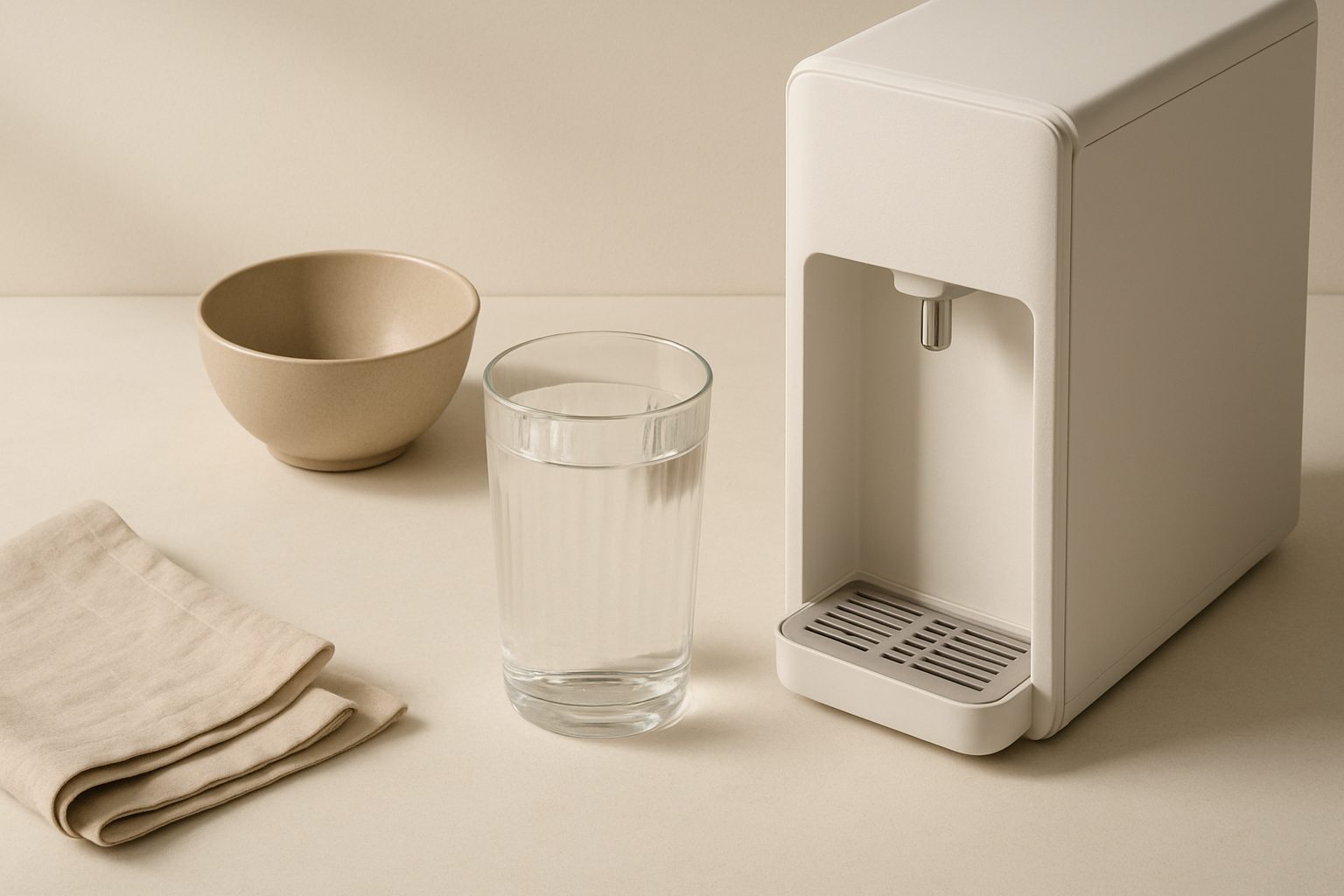
Best Commercial-Grade Water Chillers for Home Use UK 2025: Pro Performance at Home
Homeowners seeking industrial-strength cooling often find themselves looking at commercial-grade water chillers. These aren't the compact tabletop units you'll find in most kitchens—they're the backbone of professional cooling systems, and increasingly, savvy UK buyers are bringing this reliability home. Whether you're climate-controlling a wine cellar, server room, or specialised workspace, a commercial chiller delivers the durability and consistency that consumer models simply cannot match.
The shift towards commercial-grade equipment for residential use reflects a genuine need: reliability when it matters, performance that doesn't degrade, and the ability to run continuously without failure. This guide walks you through what separates professional chillers from the rest, and how to identify which ones actually work for home installation.
What Makes a Water Chiller "Commercial-Grade"?
Commercial chillers are engineered for constant-duty operation. Unlike domestic appliances designed for intermittent use, they're built to run 24/7 at full capacity, sometimes for years without servicing. The construction reflects this: heavier gauge materials, industrial-spec compressors, and robust cooling circuits designed to handle thermal loads far beyond what a standard unit manages.
The key differences aren't subtle. Commercial units feature industrial refrigeration compressors (typically semi-hermetic or open design) rather than consumer-grade sealed compressors. They include redundant safety systems, manual isolation valves for service, and cooling towers or condenser units rated for continuous operation. The control systems are simpler but far more reliable—less electronics, more mechanical safeguards.
In the UK market, commercial-grade chillers typically start around 5kW cooling capacity and climb steeply from there. Even "entry-level" commercial models are considerably larger and heavier than domestic alternatives, and pricing reflects the durability premium.
Why Homeowners Choose Commercial Models
The appeal isn't just about bragging rights. Home applications demanding commercial chillers usually involve specific, demanding scenarios:
Wine and beverage storage is a primary driver. Serious collectors need stable temperatures—commercial chillers maintain ±1°C accuracy, compared to ±3–5°C for domestic units. Over months and years, this precision prevents cork deterioration and flavour drift.
Server rooms and IT equipment cooling has grown among remote workers and small business operators. Commercial chillers cool reliably under the constant heat load that home office setups now generate. A server room that's too warm degrades hardware lifespan quickly.
Laboratory and workshop cooling for hobby applications—aquariums requiring precise temperature, laser cutting setups, or metalworking operations—often needs professional-grade equipment because domestic units simply aren't designed for the precision or continuous duty.
Large conservatory or glass extension climate control where summer heat is genuinely extreme. A commercial unit won't struggle if the space is properly insulated.
The honest truth: if you don't have a specific, demanding reason, a domestic chiller will serve you better. They're cheaper, easier to install, take up less space, and are simpler to maintain. Commercial units make sense when you need reliability that justifies the cost and space.
Key Features to Evaluate
Cooling capacity (kW) should be matched precisely to your actual load, not guessed. Oversizing wastes energy and money; undersizing fails when you need it. A wine cellar holding 300 bottles in a well-insulated room might need 2–3kW; a poorly insulated server room could demand 10kW+. Professional assessment before purchase saves significant expense.
Noise level matters more than manufacturers admit. Commercial compressors are audible. Units rated at 80–90dB aren't suitable for living spaces. If the chiller will run near occupied rooms, confirm dB ratings and ask for sound-dampening options.
Refrigerant type has shifted. Many older commercial units ran R404A or R22 (now restricted); modern units use R410A or R290. UK suppliers increasingly stock R290 units, which perform well and comply with F-Gas regulations.
Condenser cooling method determines installation complexity. Air-cooled condensers are simpler but noisier and less efficient in warm UK weather. Water-cooled condensers require a secondary cooling loop (typically a rooftop tower), adding cost and complexity but delivering better performance.
Service and parts availability in the UK is critical. Industrial suppliers like Johnson Controls, Daikin, and Airedale are reliable for parts. Obscure imports can leave you stranded if something fails.
How to Choose: Practical Steps
Start with a genuine load calculation. Measure the space's dimensions, insulation level, and expected heat generation. A qualified refrigeration engineer can do this properly—around £150–300. It's money well spent.
Next, decide between air-cooled and water-cooled. Air-cooled is simpler but less efficient; water-cooled is more expensive upfront but more efficient and quieter if you're willing to install a cooling tower.
Source suppliers through established UK channels: building services specialists, commercial HVAC installers, and major online retailers carrying industrial equipment. Check that installation support is available locally.
Request noise specifications and ask about vibration isolation options. Commercial compressors vibrate; proper mounting with isolation pads reduces transmitted noise significantly.
Confirm power requirements. Many commercial units demand 3-phase power. If your home is single-phase, you'll need an electrician to assess conversion options, which adds cost.
Installation and Regulatory Considerations
Commercial water chillers in the UK fall under F-Gas regulations if they contain more than 3kg of refrigerant. Systems over this threshold require certified engineers for installation and maintenance. You cannot legally install these yourself.
Budget for professional installation: £1,500–5,000 depending on complexity. A simple air-cooled unit is cheaper to install than a water-cooled system requiring tower placement and secondary loop plumbing.
Ensure adequate space for the chiller unit itself, condenser placement (whether air or water cooled), and service access. Professional installation includes vibration isolation, proper piping insulation, and safety valve fitting.
Maintenance requirements are straightforward but non-negotiable. Commercial units need annual professional servicing, filter changes, and refrigerant checks. Budget around £300–600 annually for this.
Final Thoughts
Commercial-grade chillers deliver genuine advantages for genuinely demanding applications. They're overkill for casual use, overpriced if you don't need the performance, and honestly more complex to maintain than consumer alternatives. But when you need precision, reliability, and the ability to run continuously without failure, commercial equipment is the only sensible choice. Size the load correctly, source from reputable UK suppliers, and budget for professional installation and ongoing service. Do that, and a commercial chiller will outlast and outperform domestic alternatives by years.
More options
- Under-Sink Mains-Fed Water Chillers (Amazon UK)
- Countertop & Tabletop Water Chillers (Amazon UK)
- Filtered Water Chiller Combo Units (Amazon UK)
- Cold Plunge & Hot Tub Water Chillers (Amazon UK)
- Replacement Chiller Filters & Maintenance Kits (Amazon UK)