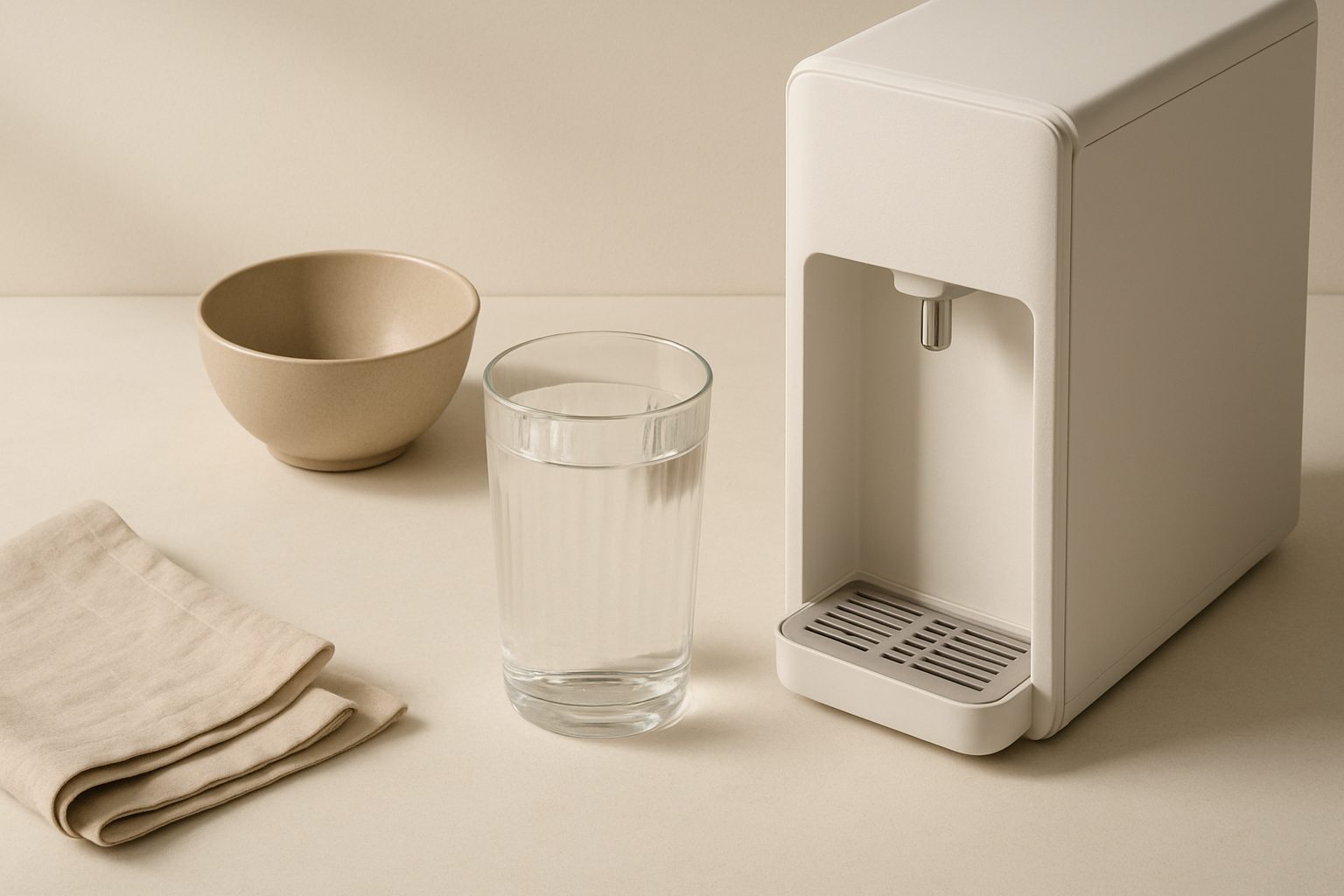
Best Countertop Water Chillers UK 2025: Compact Units for Every Budget
If you're renting, have limited space, or want chilled water without a full installation, a countertop water chiller offers straightforward relief. These compact units plug in, take up modest worktop space, and deliver cold drinking water in minutes. Unlike plumbed systems, they require no pipework or permanent installation—ideal if you're in shared accommodation or simply prefer flexibility.
This guide covers what's realistic to expect, how these units actually perform, and which situations suit them best.
How Countertop Water Chillers Work
Countertop chillers come in two main types. Point-of-use (POU) models connect to your kitchen tap via a diverter valve, filtering and cooling water as you use it. Standalone coolers hold a water bottle (usually 5–8 litres) in a cavity at the top; the unit cools the water internally and dispenses it at the tap.
Standalone bottle-fed units dominate the countertop market because they avoid plumbing altogether. You buy bottled water (or use a bottle-filling service), insert it upside-down into the cooler, and it cools the contents. Some models offer both hot and cold water; others cold only.
Running Costs and Energy Use
Expect to spend £30–50 per year on electricity, depending on ambient temperature and use frequency. Bottle-coolers are reasonably efficient; they maintain temperature passively most of the time and only active-cool when the internal reservoir dips below the set point.
The bigger cost is the bottled water itself. If you're replacing all your drinking water with cooler-fed bottles, budget for around £150–250 annually, depending on your supplier and bottle-delivery model. Refundable bottles from supermarkets (7–8 litres, usually £2–4 per fill) work out cheaper than home-delivery services, though home delivery saves the physical effort of storing and swapping bottles.
Key Features Worth Checking
Temperature range: Most offer water between 3–10°C for cold. Hot-water models typically go up to 85–90°C, which is useful for instant tea or hot drinks, but adds £20–40 to the price.
Cooling speed: Cold-water output from a new bottle usually takes 30 minutes to 2 hours to reach target temperature, depending on the cooler's compressor power and the ambient room temperature. In summer or warm kitchens, it's slower.
Dispensing options: Look for lever-action taps or push-button dispensers. Cheap models sometimes have flimsy taps that break after months of use. Mid-range units tend to be sturdier.
Bottle capacity: Standard is 5 litres (equivalent to roughly 10 large glasses). Some models fit smaller 3-litre bottles; others accommodate 8+ litres if you want fewer changes.
Drip tray: Essential. Water condensation and spills happen. A removable, washable drip tray prevents mould and odours underneath.
Footprint: Measure your available worktop space. Most units are 40–50 cm wide and 40–50 cm deep. Height varies from 60 cm (compact) to 100+ cm (with storage). Narrow kitchens can be cramped.
Who Should Consider One
Countertop chillers make sense if you:
- Rent and want no permanent fixtures
- Live somewhere without mains water suitable for drinking
- Have guests or family who prefer chilled water and would otherwise buy bottled drinks repeatedly
- Work from home and want convenient cold water without constant kettle-boiling
- Can't afford a plumbed system or don't have access to a skilled installer
They're less sensible if you live alone, rarely use chilled water, or already have a reliable tap-fed system.
Common Drawbacks
Bottled water logistics: Storing and swapping bottles regularly is inconvenient. If you use much water, expect to change bottles every 5–7 days in a household of three.
Hygiene concerns: The internal cavity where bottles sit can accumulate dust or mould if not cleaned regularly. Most manufacturers recommend sanitising every 3–6 months using a cleaning kit (usually £10–20, sometimes included).
Initial cooling delay: On a hot day, inserting a room-temperature bottle means waiting hours before it's properly cold. Planning ahead helps.
Noise: Compressor-driven coolers make a humming or whirring sound when active. It's not loud, but it's noticeable in quiet kitchens.
Limited temperature precision: You can't dial in exact degrees. Most offer "cold," "very cold," or a vague range. If you need precise water temperature for a specific use, these aren't your answer.
Budget Breakdown
Budget range (£100–150): Basic single-tap (cold only) coolers. Simple design, adequate for modest use. Often China-made; longevity varies. Good for occasional use or as a stopgap.
Mid-range (£150–250): Dual-temperature models (hot and cold), better-build coolers, recognisable UK brands. More reliable taps and compressors. This is the sweet spot for most households.
Premium (£250+): Sleeker designs, larger capacities, faster cooling, digital thermostats. Rarely necessary unless aesthetics matter or you have high daily usage.
Don't assume price equals durability. A £150 cooler from an established supplier often outlasts a £120 bargain-basement alternative.
Maintenance Reality
Beyond the regular bottle-swap, these units are low-maintenance. Wipe the drip tray weekly, clean the internal cavity every few months with a descaling kit (tap water minerals accumulate), and check the seal around the bottle-insertion point occasionally.
If the compressor fails, repair costs usually exceed replacement. Most last 3–5 years with standard use before needing replacement.
Final Thoughts
Countertop water chillers deliver what they promise: cold water without installation fuss. They're practical for renters, small households, and anyone who doesn't want to commit to plumbed infrastructure. Running costs are modest, and setup is genuinely effortless.
What they don't do is eliminate the inconvenience of swapping bottled water or eliminate the need to think ahead on hot days. They're a convenience tool, not a premium tap-water solution. If you've weighed those trade-offs and they suit your situation, a mid-range unit from a reputable supplier offers solid value.
More options
- Under-Sink Mains-Fed Water Chillers (Amazon UK)
- Countertop & Tabletop Water Chillers (Amazon UK)
- Filtered Water Chiller Combo Units (Amazon UK)
- Cold Plunge & Hot Tub Water Chillers (Amazon UK)
- Replacement Chiller Filters & Maintenance Kits (Amazon UK)