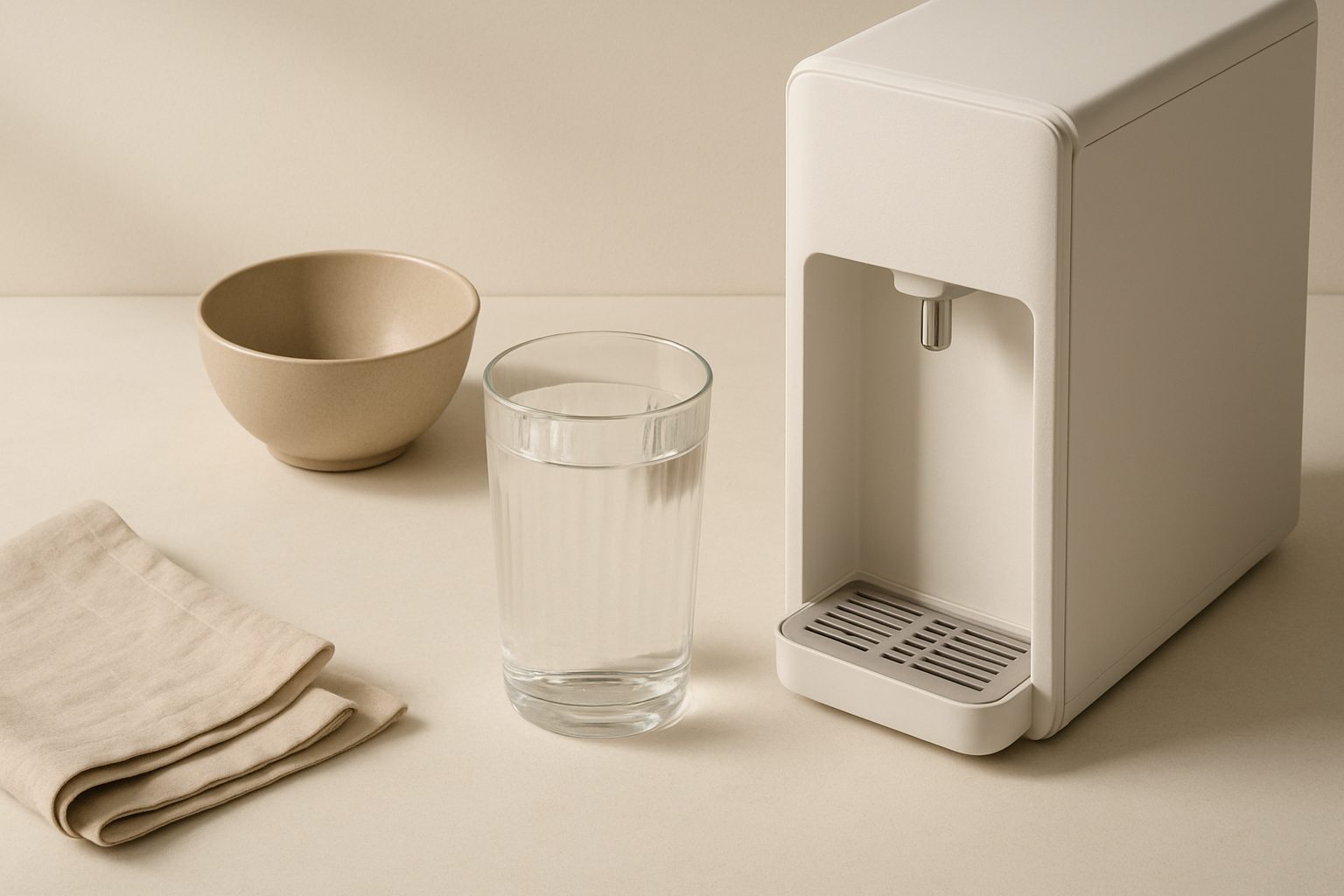
Best Home Water Chillers UK 2025: Top 10 Units Reviewed & Ranked
A reliable home water chiller transforms summer hydration—instant cold water from your tap beats running the kitchen tap or filling jugs to chill. Whether you're upgrading your office kitchen or wanting cold water on demand, the UK market now offers solid options across three main categories: under-sink, countertop, and mains-fed systems. Each has genuine trade-offs worth understanding before you commit.
What Makes a Good Water Chiller?
Before diving into specific units, the essentials matter more than spec sheets. Cooling capacity (measured in litres per hour) tells you how many cold glasses you can pour before the unit works harder. Noise level becomes relevant if the chiller sits anywhere near where you work—many budget models hum noticeably. Tank size, if it has one, determines how much chilled water stays ready to use. And maintenance: some units need descaling every few months if your water is hard; others handle it better. We've prioritised reliability and realistic performance over gimmicks or inflated claims.
Under-Sink Water Chillers: Space-Saving Champions
Under-sink units hide the mechanics away, keeping your kitchen or office clean. They connect directly to your cold water supply and sit neatly in the cupboard below.
The strengths: continuous supply (you won't run out of chilled water), excellent if your tap area is cluttered, and generally quieter operation since the compressor hides away. The weaknesses: installation matters—you'll need access to your water line and somewhere for a drain or waste pipe, which puts some off. They also take up valuable under-sink cupboard space.
A well-regarded model in this category runs around £600–£900 and delivers 20–30 litres of chilled water per hour. Installation typically takes a plumber 1–2 hours if you're not confident with DIY plumbing. The payoff is having genuinely cold water available instantly without thinking about it.
Countertop Water Chillers: Plug-and-Play Convenience
Countertop units are the simplest option: fill a reservoir, plug them in, and chilled water flows from a tap on the front. No plumbing, no installation drama.
The strengths: genuinely hassle-free setup, portable if you move house or office, and you see exactly how much cold water you have left. The weaknesses: they occupy worktop space, refilling the reservoir weekly or more often becomes tedious if you drink a lot of water, and they're noisier than under-sink systems—compressors hum audibly during cooling cycles.
Good countertop models sit in the £200–£400 bracket and hold 4–6 litres. You'll get 10–15 chilled glasses per hour on average. They suit smaller households, home offices, or anyone who values simplicity over constant supply. Noise levels vary; expect 45–55 decibels depending on the model—noticeable but not earsplitting if your kitchen isn't dead silent already.
Mains-Fed Water Chillers: Premium Setup
Mains-fed systems (also called point-of-use or POU chillers) connect permanently to your water supply, like countertop models but with commercial-grade cooling. They're common in offices and can be wall-mounted or integrated into existing cabinetry.
The strengths: unlimited supply, professional appearance, excellent for high-usage environments, and consistent temperature. The weaknesses: installation is non-negotiable (requires plumbing), they're the priciest option, and they need occasional servicing to maintain hygiene standards.
Quality mains-fed units start around £1,200 and deliver 30–50 litres per hour of genuinely chilled water. They're overkill for home use unless you have a large household or entertain regularly, but they're the gold standard for offices and commercial settings.
Price Band Summary
- Budget (£100–£250): Basic countertop models, limited cooling capacity, noisier compressors.
- Mid-range (£250–£600): Decent countertop units with better insulation, quieter operation, some under-sink options.
- Premium (£600–£1,200): Quality under-sink systems, commercial-grade mains-fed chillers for small offices.
- Top-end (£1,200+): Full mains-fed systems with advanced filtration, built-in water dispensing, service agreements.
What to Check Before Buying
Water hardness: Hard water regions (much of the south and Midlands) mean more frequent descaling. Some units handle this better; check the specification.
Noise tolerance: If your chiller lives near a workspace, prioritise models rated below 50 decibels—cheaper units often hit 60+ when cooling actively.
Cooling speed: "5 minutes to cold" sounds better than "15 minutes." Check cooling time in reviews, not just marketing claims.
Filter life: Replacement filters add to long-term cost. Budget models need filters every 3–6 months; better units stretch to 12 months or longer.
Warranty: UK brands and reputable distributors typically offer 1–2 year warranties. Check what's covered—some exclude cooling component failures.
The Honest Reality
Water chillers aren't essential, but they're remarkably practical if you actually use them. A worktop model that ends up hidden behind clutter isn't money well spent. An under-sink system you forget to maintain will eventually taste stale. The best choice depends on your space, budget, and actual daily water consumption—not on marketing promises.
For most homes, a mid-range countertop unit (£250–£400) balances simplicity and performance. For anyone serious about never drinking warm tap water again, a professional under-sink install (£700–£950) pays for itself in convenience over 3–5 years. Mains-fed systems remain the domain of offices and high-demand households.
Buy from stockists who handle warranties cleanly, and check reviews from UK users specifically—their water conditions and expectations match yours more closely than international feedback.
More options
- Under-Sink Mains-Fed Water Chillers (Amazon UK)
- Countertop & Tabletop Water Chillers (Amazon UK)
- Filtered Water Chiller Combo Units (Amazon UK)
- Cold Plunge & Hot Tub Water Chillers (Amazon UK)
- Replacement Chiller Filters & Maintenance Kits (Amazon UK)