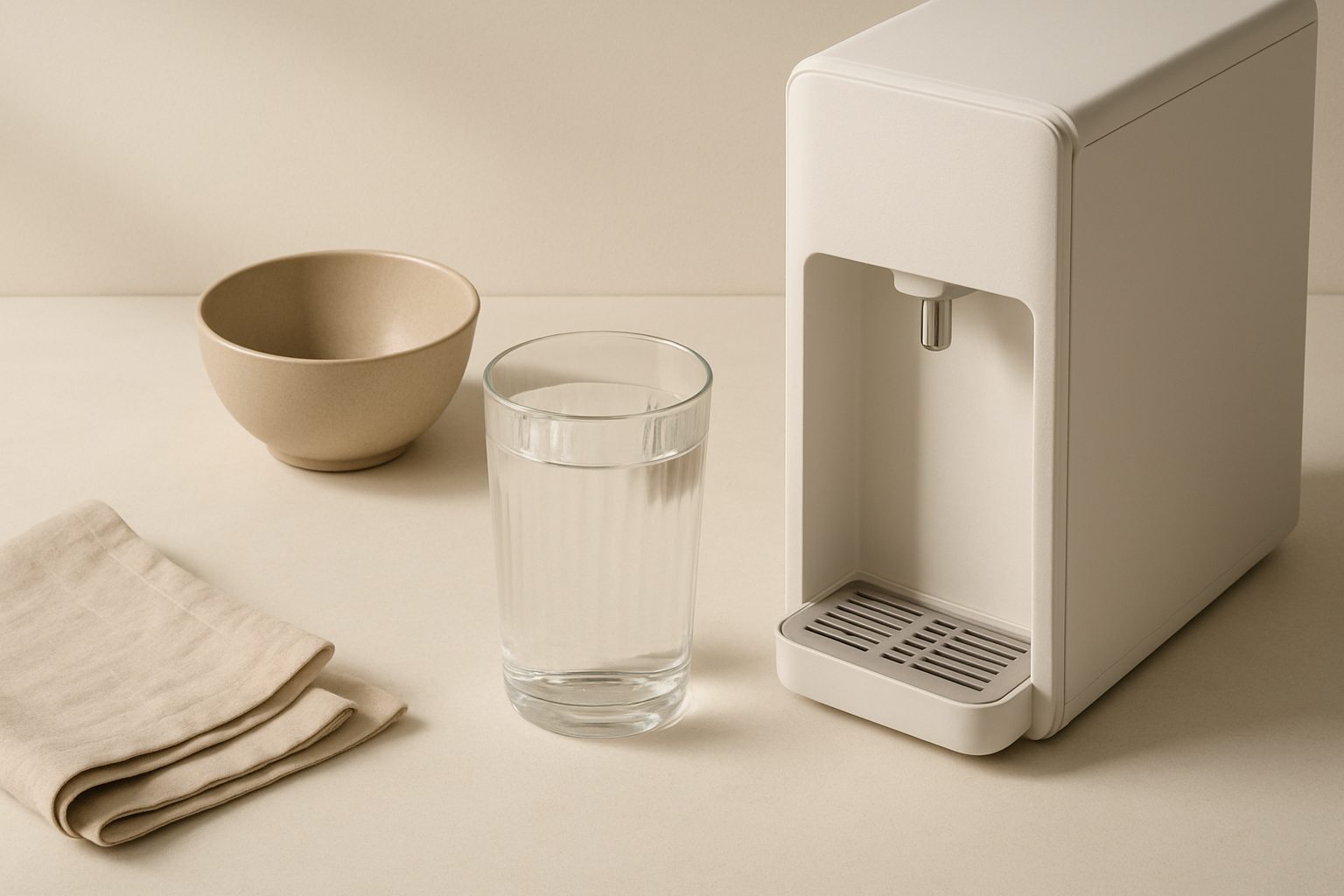
Best Home Water Chillers with Built-In Filter UK 2025: Chill and Purify Combined
If you're tired of juggling a water chiller and a separate filtration system in your kitchen, a combined unit might be exactly what you need. Built-in filter technology in modern water chillers means you can dispense cold, filtered water from one appliance—cutting down on clutter, plumbing complexity, and the hassle of maintaining two separate systems.
This isn't just about convenience, though. A chiller with integrated filtration addresses a real problem: many UK tap water supplies vary in mineral content and taste depending on your region, and while safe to drink, the quality can feel gritty, slightly chalky, or off-flavour to many people. Adding instant chill capability on top of filtration makes these units practical for families, working professionals, and anyone who wants cleaner, colder water without waiting for the kettle or standing at the tap.
Why Choose a Chiller with Integrated Filtration?
Combination units work by running tap water through a built-in filter cartridge before it reaches the cooling chamber. This approach has several advantages over buying separate devices.
First, there's the space saving. Kitchen countertops and under-sink cabinets are finite. One appliance takes up roughly the footprint of a standard water cooler but serves both purposes, eliminating the need for a separate inline filter unit or jug-based system alongside your chiller.
Second, the workflow is simpler. You don't need to refill water containers, swap between devices, or worry about water quality degrading between filtration and chilling stages. Water flows from tap to filter to cooler in one streamlined process.
Third, these systems typically use better-quality filters than you'd find in budget jug dispensers. Commercial-grade or semi-commercial filters can handle higher water volumes and often last longer, which means fewer replacements overall—though we'll return to cost considerations in a moment.
Key Considerations When Buying
Filter Replacement Costs
This is the detail that often surprises buyers and catches them off-guard. The initial purchase price might seem reasonable, but ongoing filter costs can add up significantly.
Most combined chiller-filter units use proprietary or semi-standard cartridge filters. These typically cost between £30 and £80 per cartridge, depending on filtration grade and manufacturer. Budget models might use cheaper replacements around £20, whilst higher-spec systems with multi-stage filtration (carbon, sediment, mineral filters combined) push toward £80 or more.
Replacement frequency depends on your water quality and usage. In hard-water areas across the Midlands and South East England, filters might need replacing every three to four months if you're dispensing multiple litres daily. In softer-water regions like Scotland or Wales, you might stretch it to six months. Some units include a filter-change indicator light, which is genuinely helpful for knowing when it's time to swap.
Do the maths before buying: if you're running through a £50 filter every four months, that's £150 annually just on cartridges. Factor that into the total cost of ownership alongside the initial unit price.
Water Output and Speed
Real-world chill speed matters. Some units take 20–30 seconds to dispense a full cup of chilled water; others offer instant chill or near-instant dispensing from a small reservoir.
If you're the only person using the system, a slower unit is fine. If you're a family of four or regularly have guests, sluggish output becomes annoying. Check specifications for litres per hour or cups per minute. Most mid-range home systems manage 2–4 litres per hour of chilled water, which is adequate for household use but nowhere near commercial-grade capacity.
Temperature output varies too. Most home units cool to around 4–6°C, with some reaching 2°C. Anything colder than 5°C is genuinely cold and perfectly refreshing for most people.
Installation and Space
Some models sit on countertops and plug straight in; others require plumbing connections under the sink. Plumbed-in units deliver better flow rates and save you from manually refilling water reservoirs, but they do require either a handy friend or a plumber, and they're harder to move or replace.
Point-of-use (countertop) models with built-in reservoirs are simpler to install and flexible, but you'll need to refill them—which somewhat defeats the all-in-one convenience if you're in a hard-water area and want regular filtration.
Water Quality and Filtration Standards
UK mains water is safe and regularly tested, but it's not the same across the country. Hard water (high in calcium and magnesium) isn't harmful, but it can taste chalky and damage appliances over time. A decent filter addresses taste and some mineral content, though it won't fully soften water the way a dedicated water softener would.
Look for units using activated carbon filtration, which reduces chlorine taste and odours, and sediment pre-filters, which catch particles. Some premium models add ion-exchange resin to reduce hardness slightly.
What to Look for in a System
Beyond the obvious—reliability and warranty—prioritise filter cost transparency and availability. Some niche brands use obscure cartridges that are hard to source or expensive to import. Established manufacturers have wider distribution networks and more competitive cartridge pricing.
Check energy consumption. A chiller running 24/7 uses electricity. Look for eco modes or units with adjustable temperature settings so you're not cooling water unnecessarily when you're away.
Finally, read real customer reviews focusing on longevity beyond the first six months. Initial convenience isn't valuable if the unit fails in year two.
Conclusion
A filtered water chiller handles two jobs in one space, cutting kitchen clutter and simplifying your water setup. The trade-off is higher per-use cost through filter replacements and slightly more complex maintenance than a standard kettle. If you drink a lot of cold water, live in a hard-water area, and have the budget for ongoing cartridge costs, a combined unit is genuinely useful. If you use occasional cold tap water and boil your kettle, you're probably better served by a simple water jug filter.
More options
- Under-Sink Mains-Fed Water Chillers (Amazon UK)
- Countertop & Tabletop Water Chillers (Amazon UK)
- Filtered Water Chiller Combo Units (Amazon UK)
- Cold Plunge & Hot Tub Water Chillers (Amazon UK)
- Replacement Chiller Filters & Maintenance Kits (Amazon UK)