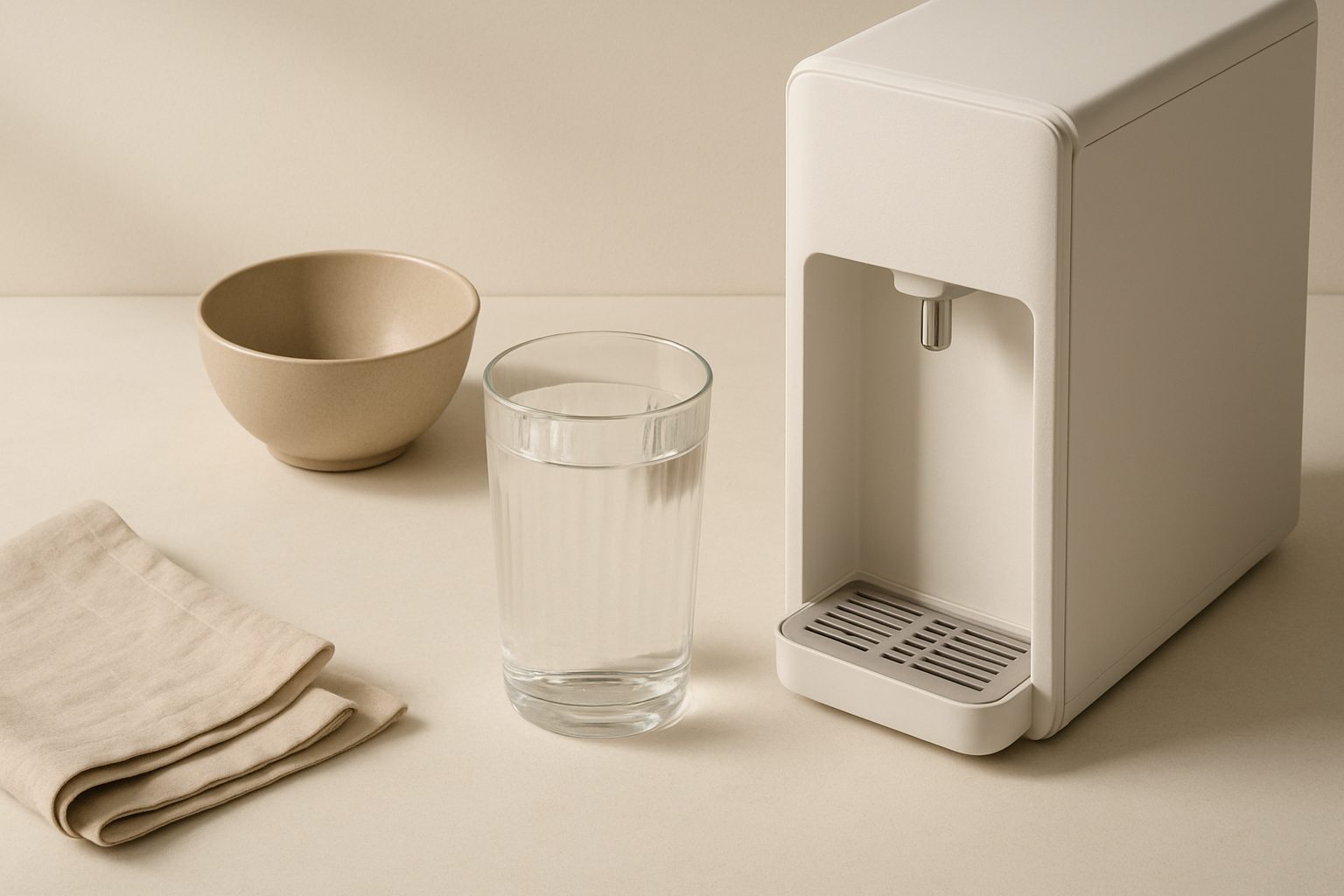
Cold Water Dispenser for Home UK 2025: Complete Guide to Choosing the Right Unit
A cold water dispenser delivers chilled drinking water on demand, without waiting for a kettle or relying on bottled water. Whether you're thinking about a compact countertop unit or a larger integrated system, choosing the right dispenser depends on your space, budget, and water habits. This guide covers the main types, what to consider, and how to avoid expensive mistakes.
What Is a Cold Water Dispenser?
Cold water dispensers come in two broad categories: standalone units and integrated systems. Standalone models sit on your counter or floor and chill water you pour into a reservoir or connect directly to your mains water. Integrated units fit into kitchen cabinets or sit under your sink, feeding chilled water through a dedicated tap.
Unlike traditional water coolers that need bulky bottle exchanges, most home dispensers now work either with a water bottle (like a top-loading cooler) or directly from your mains supply. Mains-fed models are increasingly popular because they eliminate refilling and offer unlimited cold water without the logistics of bottle delivery.
Types of Cold Water Dispensers
Countertop Standalone Units
These sit on your kitchen counter and typically come with a built-in reservoir that you refill manually or connect to a water bottle. They're quick to install, need no plumbing, and cost £150–£400. The trade-off: limited capacity and you'll refill weekly. Ideal if you rent, have limited space, or want to test the concept first.
Bottle-Fed (Water Cooler Style)
The traditional office-style cooler adapted for homes. You buy bottles (5–10 litres) from supermarkets or arrange delivery, and they slot into the top. These cost £200–£600 and deliver reliable cold water without plumbing. The downsides: ongoing bottle costs (£1–£3 per bottle), storage space for spares, and environmental waste. Still popular for households that want simplicity without mains connections.
Mains-Fed Under-Sink Units
Connected directly to your water supply, these fit under the sink and feed a dedicated tap on your worktop. They cost £400–£1,200 and require installation (professional fitting adds £100–£300). Once set up, they're the most convenient: unlimited cold water, no refilling, minimal ongoing costs. The catch: installation is permanent, and you'll need basic plumbing access.
Integrated Fridge Systems
Some modern fridges include built-in water dispensers. If you're replacing your fridge anyway, this adds £300–£800 to the cost but saves space and looks seamless. They're convenient but tie you to one appliance, and repairs can be costly.
Key Considerations Before Buying
Installation Requirements
Countertop models need only a power socket. Bottle-fed units also just need space and a socket. Under-sink systems require access to your water supply and often a drain connection; if your kitchen plumbing isn't suitable, professional installation becomes essential. Ask your plumber upfront—hidden complications can double the cost.
Water Quality and Filtration
All cold dispensers chill water, but not all filter it. If you have hard water or concerns about tap quality, look for a unit with a built-in filter. Filters add £40–£80 to the purchase price and cost £20–£50 to replace annually. Some mains-fed models include multiple-stage filtration; others offer it as an optional add-on.
Cooling Capacity
Measured in litres per hour, cooling capacity determines how quickly the unit produces cold water. A typical household dispenser cools 2–5 litres per hour. If you have a large family or entertain frequently, pay attention to this spec—a slow unit will frustrate daily use. Mains-fed models tend to have higher capacity than standalone units.
Running Costs
Standalone and bottle-fed units are cheap to run (£10–£20 per year in electricity). Mains-fed models cost £20–£40 annually. The bigger expense comes from bottled water if you go that route—a household buying two 10-litre bottles weekly spends £100–£150 per year. That's worth factoring into your decision.
Maintenance and Cleaning
All units need regular cleaning to prevent mould or bacterial growth. Countertop and bottle-fed units are straightforward to empty and wipe down. Mains-fed systems are less accessible and may require professional cleaning every 6–12 months (£50–£100). Filter replacement is easy if you choose a model with cartridges you can swap yourself.
Is a Cold Water Dispenser Right for You?
A cold water dispenser makes sense if you regularly drink tap water but find yourself constantly filling glasses at the tap, buying bottled water, or waiting for jug filters to work. They're particularly useful in kitchens with poor water pressure or if you live in a hard-water area and want filtered cold water available instantly.
They're less essential if you're happy with filtered jugs, rarely drink cold water, or have a fridge with an ice-and-water dispenser already built in.
Next Steps
Once you've decided cold water is what you want, your next decision is which type suits your home. Renters and those with limited space should explore countertop or bottle-fed options. Homeowners with permanent kitchen plans and good mains access can evaluate mains-fed systems. Detailed product guides for each type, including specific models and price comparisons, are available to help you narrow down further.
The right dispenser removes friction from an everyday habit—making sure you stay hydrated without the environmental cost of single-use bottles or the hassle of managing deliveries.
More options
- Under-Sink Mains-Fed Water Chillers (Amazon UK)
- Countertop & Tabletop Water Chillers (Amazon UK)
- Filtered Water Chiller Combo Units (Amazon UK)
- Cold Plunge & Hot Tub Water Chillers (Amazon UK)
- Replacement Chiller Filters & Maintenance Kits (Amazon UK)