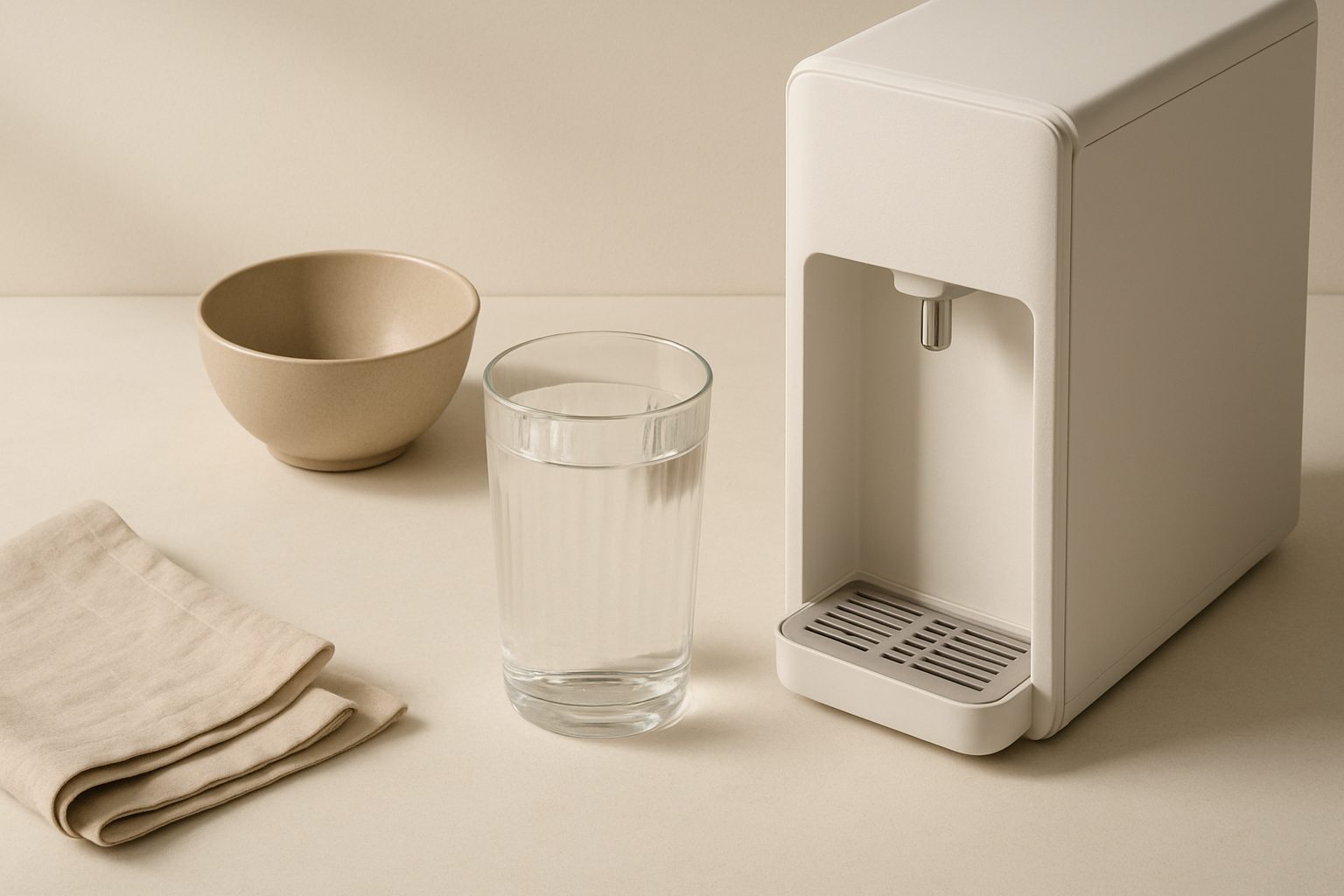
How Much Electricity Does a Home Water Chiller Use? UK Running Costs Explained
Home water chillers have become increasingly popular in UK households—especially for gaming setups, workspaces, and home bars—but few people understand what they actually cost to run. The electricity consumption varies dramatically depending on the model, capacity, and how often you use it. Let's break down the real numbers so you can work out whether a water chiller makes financial sense for your situation.
What wattage do home water chillers use?
Most compact home water chillers draw between 50 and 200 watts during active cooling. This might sound modest compared to a kettle or tumble dryer, but these units run almost continuously when switched on.
Entry-level small chillers—the kind designed for a single PC water loop or small beverage cooler—typically consume 50 to 80 watts. Mid-range units, which can cool larger volumes or maintain lower temperatures, draw 100 to 150 watts. High-performance models and larger capacity chillers can reach 200 watts or more.
The key difference from appliances like kettles is duration. A kettle uses 3,000 watts but only for a few minutes. A water chiller uses far less power per hour, but it runs for hours on end if you're using it for a PC loop, gaming room cooling, or an always-on beverage system.
Calculating your annual running costs
To work out annual costs, you need to know three things: the wattage, how many hours per day you run it, and your electricity rate.
Most UK households pay around 24–28 pence per kilowatt-hour (rates vary by supplier and region). Let's use 26p as a realistic middle ground.
A 100-watt chiller running 8 hours per day:
- Daily consumption: 0.1 kW × 8 hours = 0.8 kWh
- Daily cost: 0.8 × £0.26 = £0.21
- Annual cost: £76.50
A 150-watt chiller running 12 hours per day:
- Daily consumption: 0.15 kW × 12 hours = 1.8 kWh
- Daily cost: 1.8 × £0.26 = £0.47
- Annual cost: £171.50
A 70-watt efficient chiller running 16 hours per day:
- Daily consumption: 0.07 kW × 16 hours = 1.12 kWh
- Daily cost: 1.12 × £0.26 = £0.29
- Annual cost: £106.85
These figures show why people often assume water chillers are cheap—they appear affordable in isolation. But if you're considering one alongside other cooling or computing expenses, it's worth knowing the cumulative effect.
Comparing popular models
Different chiller types consume different amounts of power:
Peltier-based chillers (using thermoelectric cooling) typically draw 80–120 watts. They're affordable upfront but generally less efficient, so you might run higher wattages for the same cooling performance. Annual running costs tend to range from £60 to £150 depending on usage.
Compressor-based mini chillers use 120–180 watts but provide better cooling efficiency. You get more performance per watt, so despite higher power draw, the cost-per-degree-of-cooling can be competitive. Expect £90–£210 annually.
High-efficiency models marketed for PC enthusiasts or professional cooling often claim lower wattage—sometimes as low as 50–70 watts—but they sacrifice cooling capacity. These suit continuous low-demand cooling and can run for £40–£100 per year.
Larger commercial-style units designed for outdoor bars or full-room cooling systems can exceed 300 watts and cost £250+ annually.
Factors that affect energy consumption
Several things determine how hard your chiller works:
Ambient temperature. If your room is hot, the chiller must work harder to maintain the target water temperature. Summer running costs can be 30–40% higher than winter.
Target temperature. Chilling water to 5°C requires more energy than 10°C. Lower targets mean higher electricity use.
Usage pattern. A chiller running 24/7 costs significantly more than one you switch on when needed. Gaming setups and workspaces with irregular use are cheaper to run than always-on beverage systems.
Water volume. Larger reservoirs take longer to cool initially, increasing energy use. However, once cooled, they cool more slowly, so you might use less energy maintaining a stable temperature over time.
Dust and maintenance. Clogged filters and dust-covered cooling fins reduce efficiency. Cleaning your chiller annually can improve efficiency by 5–10%.
How to reduce running costs
If you're worried about electricity costs, a few practical steps help:
Position your chiller in a cool space, away from direct sunlight and heat sources. Even a 5°C drop in ambient temperature reduces running costs noticeably.
Insulate your water loop or beverage container. Better insulation means the chiller doesn't work as hard to maintain temperature.
Consider a timer or smart plug. If you don't need cooling all day, switching it on only when needed can halve your annual costs.
Choose an efficient model upfront. A higher-quality chiller that consumes 70 watts will cost less to run than a cheap one drawing 120 watts, even if the upfront price is higher.
The bottom line: home water chillers aren't electricity hogs, but they aren't free either. Annual running costs range from around £40 to £250 depending on the model, usage, and season. For most people, it's a modest expense—but it's worth calculating before you buy.
More options
- Under-Sink Mains-Fed Water Chillers (Amazon UK)
- Countertop & Tabletop Water Chillers (Amazon UK)
- Filtered Water Chiller Combo Units (Amazon UK)
- Cold Plunge & Hot Tub Water Chillers (Amazon UK)
- Replacement Chiller Filters & Maintenance Kits (Amazon UK)