Instant Cold Water Tap vs Separate Chiller Unit UK: Which Is Better Value?
When you're planning a kitchen renovation, adding instant chilled water feels like a luxury worth having. But once you start looking at options, you'll find two very different approaches: built-in instant cold taps (like Quooker) and standalone under-sink chiller units. Both deliver cold water on demand, but they work differently, cost differently, and suit different situations. Here's what you actually need to know to choose between them.
What's the Difference?
An instant cold water tap is a single fixture that combines the tap spout with filtration and chilling technology built into the unit itself, or connected via hidden plumbing under your sink. You get filtered, chilled water straight from the tap, alongside your regular hot and cold supplies.
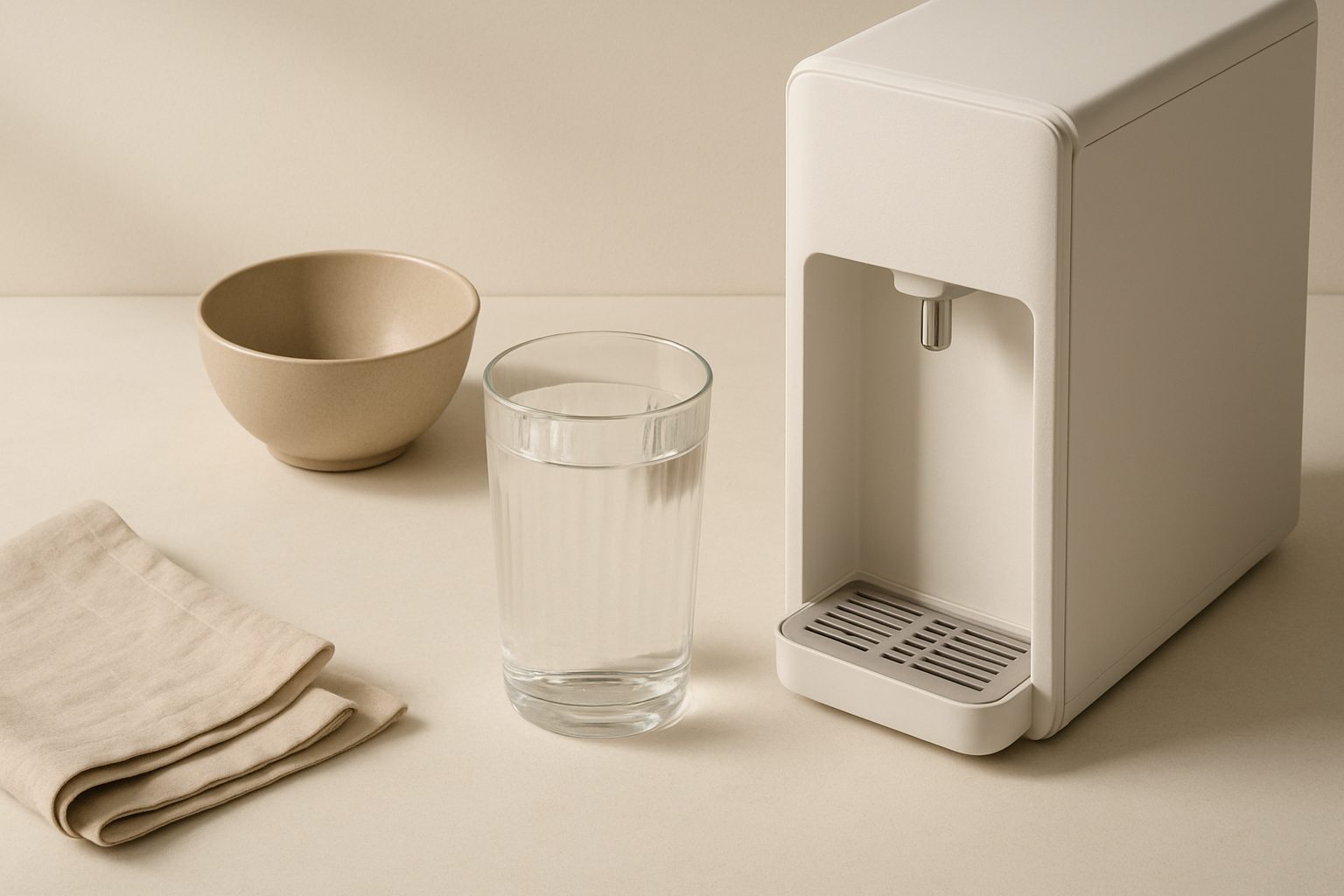
A separate chiller unit is a standalone appliance—usually a small point-of-use chiller sitting under the sink or on the worktop—connected to your existing cold water supply and your tap. Some sit inside a cupboard; others are standalone dispensers with their own tap built in.
The key difference: with an instant tap, chilling is integrated into your kitchen's plumbing; with a chiller unit, you're adding a separate appliance to your existing setup.
Installation: DIY vs. Plumber Required
Instant cold water taps almost always need a professional plumber to fit properly. You're connecting to your mains water supply, potentially adding filtration cartridges, and installing hidden pipework. Expect a plumber's call-out costs on top of the tap's price—typically £150–£400 for installation, though this varies by complexity and your location.
Standalone chiller units are often simpler. Many can be connected and installed by a reasonably confident DIYer: feed the inlet hose from your cold tap or mains, place the unit where you want it, and run the outlet tube to your dispenser tap or sink. Some models even plug into a standard socket with no plumbing needed—they just sit beside the tap you're chilling water into. This means you can avoid call-out charges entirely.
However, if you want a neater setup with built-in pipework for a chiller unit, you'll still need professional fitting.
Running Costs and Maintenance
Instant cold water taps are low-maintenance once installed. They filter and chill water continuously (or on demand, depending on the model), and most use only a small amount of electricity—typically £8–£15 per year in running costs. Cartridge replacements every 6–12 months cost £20–£50.
Standalone chiller units tend to use more electricity because they're actively cooling water and maintaining its temperature. Running costs typically fall between £30–£60 annually, sometimes more if the unit works hard in summer. They also need regular cartridge changes (£15–£40), and some models require annual servicing or scale removal if you have hard water.
Over five years, the running and maintenance costs of a chiller unit can be two to three times higher than an instant tap.
Upfront Cost
This is where instant taps look expensive. A decent Quooker or equivalent costs £800–£1,500. Add installation (£150–£400) and you're looking at £950–£1,900 before the first glass of water.
Standalone chiller units are cheaper to buy: £300–£800 for a quality unit, and potentially free installation if you DIY it. Your total outlay might be £300–£1,200.
If cost is your main concern, a chiller unit wins on the front end.
Water Quality and Filtration
Both deliver filtered water, but they work differently. Instant taps integrate a filter cartridge into the system, so you're filtering every drop. They typically remove chlorine, sediment, and some contaminants. Quality varies by model.
Chiller units also filter water, but the filter is in the unit itself. The advantage: if your mains water is already decent, the unit's filtration handles the final polish before chilling. In areas with soft water, this is fine. In hard-water areas, scale buildup can be an issue, and you may need more frequent cartridge changes.
Neither will give you water quality equivalent to a whole-house system, but both are better than drinking unchilled tap water.
Space and Aesthetics
An instant cold water tap is a single, sleek fixture at your sink. It looks integrated and clean—there's no appliance visible under the cupboard or taking up space.
A standalone chiller unit sits somewhere: under the sink (taking cupboard space), next to the sink (on the worktop), or as a point-of-use dispenser with a water bottle. This is less elegant if kitchen aesthetics matter to you.
Which Is Right for You?
Choose an instant cold water tap if:
- You're doing a full kitchen renovation anyway and can absorb the installation cost
- You value a clean, integrated look
- You want minimal ongoing maintenance
- You plan to stay in the house long-term (the upfront cost recouping over time)
- You use a lot of chilled water daily
Choose a standalone chiller unit if:
- You want to avoid plumber's bills
- Your budget is tight upfront
- You're renting or hesitant about permanent modifications
- Your kitchen space is limited and you don't mind worktop or cupboard appliances
- You want the option to take the unit with you if you move
The Honest Middle Ground
Neither option is "the" right answer for everyone. If you're spending £8,000+ on a kitchen redesign, an instant tap's extra £1,500 feels proportional. If you're refreshing a modest kitchen on a budget, a £500 chiller unit saves you money and delivers the same chilled water without the commitment.
The best value depends on your circumstances, not on the technology itself.
More options
- Under-Sink Mains-Fed Water Chillers (Amazon UK)
- Countertop & Tabletop Water Chillers (Amazon UK)
- Filtered Water Chiller Combo Units (Amazon UK)
- Cold Plunge & Hot Tub Water Chillers (Amazon UK)
- Replacement Chiller Filters & Maintenance Kits (Amazon UK)